Why Northern Portugal Works So Well for a Slower Private Journey?
There are places that reward movement. Northern Portugal often rewards something else: time.
Time to sit a little longer after lunch.
Time to follow a road because the landscape has changed.
Time to walk through a small town without needing to turn it into a list of monuments.
Time to understand how wine, mountains, rivers, food and local history belong to the same territory.
For couples and independent travellers who prefer a private journey to a packed programme, this makes Northern Portugal particularly interesting.
Not because there is less to see. Quite the opposite.
The difference is that much of what makes the region memorable is easier to experience when the journey is not rushed.
Why is Northern Portugal particularly suited to slow private travel?
Northern Portugal combines very different landscapes and cultural regions within a journey that can remain coherent.
Porto can be the starting point. The Douro Valley introduces vineyards, wine estates and one of Portugal's most recognisable landscapes. Minho brings greener scenery, historic cities and a different architectural character. Further inland, Basto, the Alvão, Chaves, Barroso and Trás-os-Montes reveal mountain roads, villages, rivers and a quieter side of the country.
These places do not need to be experienced as separate products. A private multi-day journey can connect them gradually.
That matters because the transition between regions is often part of the experience itself.
A landscape changes.
The architecture becomes different.
Lunch becomes something you would not have ordered the previous day.
The climate, vegetation and even the way people speak can shift over surprisingly short distances.
Travelling more slowly allows those differences to become visible.
Small cities work differently when you have time
Some of Northern Portugal's most rewarding places are neither large cities nor famous tourism landmarks. Chaves is a good example.
Its Roman bridge, historic centre, thermal tradition and position close to the Spanish border can all be described on a conventional itinerary.
But the experience of Chaves is also sitting in the centre, walking along the Tâmega, entering a small shop, having lunch without watching the clock and understanding its relationship with the surrounding territory.
The same is true elsewhere.
Guimarães and Braga have major historic and cultural landmarks, but they are also cities where walking without a rigid agenda can be part of the visit.
Smaller towns across Basto and Trás-os-Montes often make even more sense this way.
Slow travel is not about doing nothing.
It is about leaving enough room for a place to become more than a stop.
The Douro Valley needs more than a checklist
The Douro is one of the easiest places in Portugal to visit badly.
A viewpoint.
A winery.
Lunch.
A photograph.
Back to Porto.
Technically, you have visited the Douro.
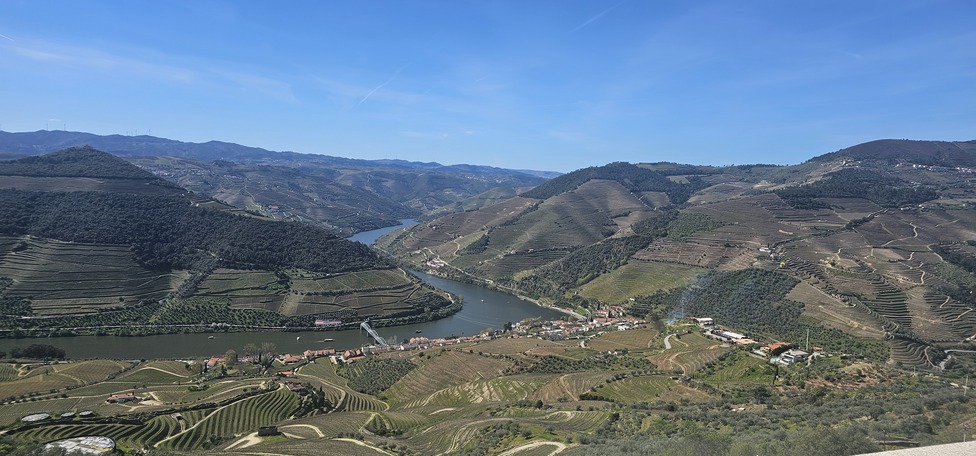
But the Douro Valley is a landscape shaped over centuries, and its scale is difficult to understand when every hour has already been allocated.
A private journey can approach the region differently.
There may still be a wine estate, a tasting or a special lunch. But there can also be time to understand the landscape, talk to a producer, follow a smaller road or simply stay somewhere because the afternoon light has changed the valley.
For travellers interested in wine, this distinction matters.
Wine becomes part of the territory rather than an activity inserted into the day.
Nature does not have to mean an expedition
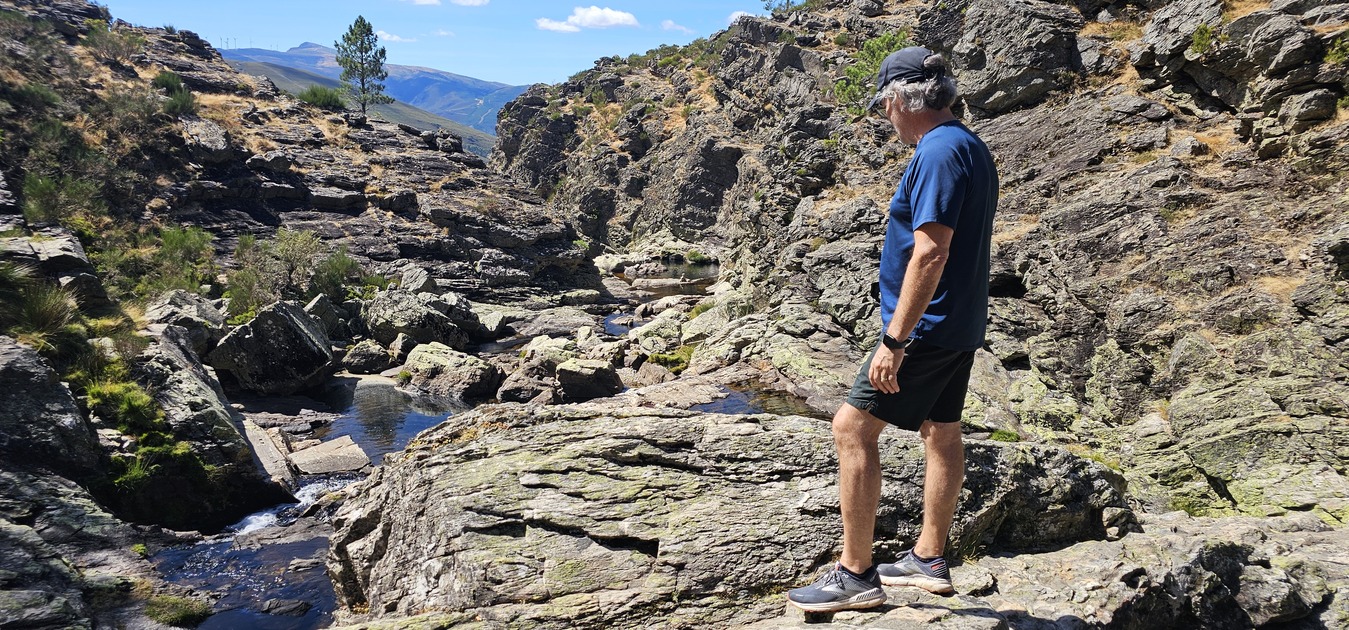
Northern Portugal has mountains, rivers, waterfalls, protected landscapes and walking routes.
But enjoying nature does not require turning every day into an endurance test.
For many travellers, particularly couples travelling over several days, the right balance might be a short walk in the morning, a scenic route, lunch in a village and a quieter afternoon.
Another day may be more active.
The advantage of private travel is that the programme can respond to the people taking the journey.
Areas such as the Alvão, Basto and Barroso are particularly well suited to this approach because nature, villages, roads, food and local culture exist very close to one another.
The landscape does not have to become a separate excursion.
It can simply be part of the journey.
Why does private travel make such a difference?
Slow travel and private travel are not exactly the same thing.
But they work particularly well together.
A fixed group tour inevitably needs a common timetable. Everyone leaves together, stops together and continues together.
A private journey has a different logic.
If lunch lasts longer because the conversation is good, the afternoon can change.
If the weather makes a mountain walk less appealing, the day can take another direction.
If you discover that you are more interested in wine than expected, or that small historic towns fascinate you more than museums, the following days can sometimes reflect that.
This does not mean travelling without organisation.
Accommodation, important visits and logistics still need careful planning.
The difference is that the itinerary provides structure without becoming a constraint.
Is slow travel especially suitable for mature or retired travellers?
It can be, but age is not really the defining factor. What matters more is the way someone wants to travel.
Many mature and retired travellers have something extremely valuable: time.
They may prefer fewer hotel changes, comfortable transport, realistic walking distances and days that do not begin at 7am simply because an itinerary says they should.
But they may also be intensely curious, active and interested in discovering places well beyond the obvious tourism circuit.
A slower private journey allows both things to coexist.
Comfort does not have to mean a superficial experience.
And travelling at a calmer pace does not mean travelling passively.
How many places should you include?
Usually fewer than you initially think.
One of the easiest mistakes when planning Northern Portugal is to look at a map, realise that many places appear relatively close to one another, and try to include all of them.
The result can be a technically efficient itinerary that feels surprisingly exhausting.
Porto, the Douro Valley, Minho, Basto, Chaves, the Alvão, Barroso and Trás-os-Montes can all belong to the same broader Northern Portugal journey.
They do not all need to belong to the same week.
For a slower journey, the more useful question is not:
How many places can we fit in?
It is:
Which places work naturally together for the kind of journey we want?
That small change in perspective can completely alter the experience.
Some of the best moments cannot be scheduled
There is a paradox in private travel.
Good journeys require planning.
But some of their best moments happen when the plan leaves enough room for something unexpected.
- A conversation.
- A road not originally considered.
- An empty village square.
- A producer who has more time than expected.
- An afternoon when nobody feels like moving on.
Those moments are difficult to sell as products because they cannot be guaranteed.
But a journey can be designed to make them more possible.
And Northern Portugal is particularly good at providing the conditions for them.
A different way to travel through Northern Portugal
A slower journey does not mean deliberately avoiding Porto, the Douro or important heritage sites.
It means putting them into a larger context.
It means allowing wine to connect with landscape, cities with surrounding countryside, nature with food, and historical places with the communities that still live around them.
For some travellers, that means five or six carefully designed days.
For others, it means a much longer journey with free afternoons and very few hotel changes.
There is no single correct route.
The important thing is that the itinerary follows the traveller rather than forcing the traveller to follow the itinerary.
That is the idea behind Northern Pathways' Private Slow Travel in Northern Portugal: private, multi-day journeys shaped around your pace, interests and way of travelling.
[Explore Private Slow Travel in Northern Portugal for Couples →]